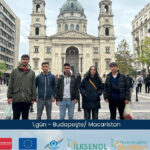
YÜKSEL KARA
Budapest, Hungary
The 3rd Largest Parliament Building in the World-This beautifully situated building overlooking the Danube River is known as the Fisherman’s Bastion. Designed in the 19th century as a watchtower, it is a majestic structure designed to offer the best panoramic view of the city. Together with the imposing Yedikule, located in the hills of Budapest, it is a tourist center with a rooftop. Romantic in its ornamentation and design, the view of the Danube River and the architecture resembling trenches that feel like they were built to protect against war. Although this architectural style is the first thing that stands out, its modern structure was not originally designed with this in mind. It was built between 1895 and 1902.
St. Stephen’s Basilica-St. Stephen’s Basilica, the largest church in Budapest, is one of the most magnificent buildings in the city. The 9.5-ton bell, the largest bell in Hungary, is also located here.
The Church of St. Matias, built in 1015 by the Hungarian King St. Stephen, was known as the “Church of Mary” until the 19th century. As a result of fires and uprisings against the Habsburg Dynasty, it was destroyed by the Hungarian people. In the 19th century, the church was rebuilt and renamed in honor of King Matias. This church, which is of great historical importance, has hosted the coronation ceremonies of many monarchs. After the 1526 Battle of Mahomet Square, the church was given great importance in Hungary, which fell to the Ottoman Empire. In 1514, the Ottomans closed the figures inside the church and turned it into a mosque. The first Friday prayers were offered here by Suleiman the Magnificent and it became the main mosque of Budapest. During the Second World War, German forces used the church as a camp. After the war, a major restoration was carried out between 1950 and 1970, with contributions from the Hungarian government and wealthy families. From the Fisherman’s Bastion, you can photograph the Danube River with a beautiful view in front of the St. Matias Church, which is located just above the Fisherman’s Bastion.
Chain Bridge – The Chain Bridge, built in the 19th century and surviving from the Middle Ages to the present day, is an important structure that connects east to Budapest and west to Pest. It used to be built in the fall and spring, but was dismantled in the winter due to the freezing of the Danube River. This bridge, which gained great importance during the Second World War, has a beautiful view of the Danube underneath.
Shoes on the Danube – In memory of the Jews killed during the Second World War, there are shoes fixed to the ground on the west bank of the Danube. This monument of 60 pairs of shoes is a reminder of the horrors of war and genocide.
Bratislava, Slovakia
Grassalkovich Palace – The residence of the President of Slovakia, this building has a French garden and is famous for its landscaped gardens and fountain pool with a giant statue of the world.
St. Michael’s Gate – A gateway to the city walls in the 14th century, St. Michael’s Gate also houses a museum of weapons and an entrance gate with a view of the city from the top floor. This tower used to be used for the defense of the city, but in time it also functioned as a watchtower. It is located next to the Michalska Gate, the entrance gate to the city.
Čumil Statue – The Čumil Statue is a bronze statue depicting a sewer worker looking at you through a manhole cover. It is one of the interesting and popular landmarks of Bratislava.
St. Martin’s Cathedral – One of Bratislava’s landmarks, this gothic cathedral adorns the city’s skyline. I recommend seeing the stained glass windows and historical ruins inside. It is located below the Bratislava Castle.
Bratislava Castle – Bratislava Castle, a rectangular building with four corner towers, is located on the banks of the Danube River. Due to its size and location, it has been one of Bratislava’s main landmarks for centuries. It has four entrances: the Vienna Gate, the Zigmund Gate, the Nicholas Gate and the Leopold Gate. The castle became an important center during the Great Moravian Empire and retained its status throughout the centuries. Used as a royal residence between 1761 and 1776, the castle was bombed by Napoleon Bonaparte’s army in 1809 and then severely damaged by fire in 1811. The castle was restored in 1957 and the interrupted restoration work was completed in 1968.
Vienna, Austria
Sisi Museum – The Austrian Parliament Building is one of the city’s most imposing buildings. Located near the Hofburg Palace and the Palace of Justice, it was designed by the architect Baron Theophil Hansen in the Greek Revival style, inspired by the Greek temple, emphasizing the architecture of Vienna. Outside the Austrian Parliament Building, there is a statue of the goddess Athena, as well as the Pallas Athena Fountain with statues symbolizing the regions of the Austro-Hungarian Empire on both sides. The exterior of the building is adorned with hundreds of statues to admire and offers a spectacular view at sunrise and sunset.
Vienna Hofburg Palace – The Hofburg Imperial Palace, which consists of three sections: the Imperial Apartments, the Silver Collection and the Sisi Museum, exhibits the belongings of Franz Joseph and Queen Sisi. French Queen Marie Antoinette, known for her saying “If there is no bread, let them eat cake”, was also born in this palace. Built in 1654, the palace was used by the most important personalities of the Austrian and Hungarian Empire. The other name of this palace is the Royal Palace of Vienna. For more than 600 years, Hofburg Palace, which has been home to many important dynasties of the Austro-Hungarian Empire, especially the Habsburg Dynasty, is mostly used as a winter palace.
Zurich, Switzerland
Grossmünster – A Romanesque cathedral with twin towers, the Grossmünster is located on the banks of the Limmat River and is one of the three largest churches in Zurich. The cathedral offers a bird’s eye view of Zurich from its beautiful riverside setting.
Zurich Opera House – The first permanent theater in Zurich was built in 1834. In 1890, it burned down in a fire and was replaced by the Zurich Opera House (Opernhaus Zürich), which was built in just 6 months and opened in 1891. Designed by Austrian architects Fellner and Helmer, the building was restored between 1982-84. The building, which was opened with the works of famous artists after the restoration, hosts only opera and ballet performances. This building, which has made a name for itself in recent years, won the best opera house award at the “International Opera Awards” in 2019.
Swiss National Museum – Built in 1898 in a historical style, the museum building was designed by Gustav Gull in the style of a French chateau. With its dozens of towers and courtyards, the museum is located on a peninsula on the Limmat River and stands out with its impressive architecture. Lake Zurich is a rich area known for the presence of pile-based houses in the past.
Zurich City Hall – Built on a foundation anchored over the Limmat River, the Zurich City Hall is connected to the Limmat pedestrian area by a footbridge. Built in 1397, it replaced a 13th-century courthouse and houses the council chambers of the old city.
Lake Zurich – Lake Zurich is a rich area known for the presence of pile-foundation houses in the past. In 1854, when the water level dropped, children playing in the lake area found bones, stones, horns and pieces of wood. The lake, which has a history dating back to the Holy Roman Germanic Empire, is still used for freight and food transportation today, and there are passenger ships and ferries sailing.
Paris, France
Eiffel Tower – We had the opportunity to visit the Eiffel Tower both day and night. At night, the view becomes much more pleasant and impressive.
Notre Dame Cathedral – Notre Dame Cathedral, which reflects the architectural elegance of Paris in the most beautiful way, is a gothic style building. Located on the banks of the Seine River, the cathedral was built between 1163-1334. This place was also considered sacred by the Celts and Romans. The road that passes in front of the main door of Notre Dame Cathedral is called “kilometer zero”. Religiously valuable objects, such as the crown of thorns of Jesus Christ, add to the cultural value of the building. The historic building was closed to visitors after a fire disaster that resulted in the complete collapse of the roof and the collapse of the tower. According to official statements, after a five-year restoration process, it will start welcoming tourists again. So, until the restoration is complete, we will have to content ourselves with seeing the building only from the outside.
Louvre Museum – When talking about the symbols of Paris, it would be incomplete not to mention the Louvre Museum, one of the most important museums in the world. Nearly 35 thousand artifacts are exhibited in the museum and the Mona Lisa, which became famous in the 20th century, attracts the most attention. The original purpose of the museum building is quite different from its current use. It can take weeks to explore all the collections in the museum. It is also quite crowded during daylight hours. For those who don’t like crowds and want to have a different experience, the museum is also open for night visits on certain days of the month.I had a great time everywhere we went. I would like to thank everyone who contributed to this project.
AYŞENUR TOPALAK
Budapest, Hungary
MHungary could be in the first place among the countries I have been fascinated by. I wasn’t expecting such a place before I went; I didn’t have any foresight, so I might have been quite surprised. We visited St. Stefan’s Basilica; it was a very impressive place. This is the largest church in Budapest and one of the most magnificent buildings in the city. Formerly a cathedral, this church was converted into a basilica by order of the Pope. Its construction, which started in 1851, took more than 50 years. When you look at the structure, it is obvious that it really took years to build. However, in the middle of construction, the dome of the church collapsed and almost everything was rebuilt. In 1867, the architect József Hild, who knew and implemented the original plans, died. Miklós Ybl, one of Europe’s most important architects, then took over and the building was inaugurated in 1906 in the presence of Emperor Franz Joseph.
Another masterpiece I saw in Budapest was the Parliament Building, one of the most magnificent buildings I have ever seen. It is the same height as St. Stefan’s Basilica, symbolizing the balance between religion and state affairs. We then visited Buda Castle. First completed in 1265, the castle was built between 1749 and 1769 to take its current gigantic form. This historical building in Budapest is the historical castle and palace complex of the Hungarian kings. The Fisherman’s Bastion is a building that houses historical buildings in a large area and takes its name from the nearby fish market. This building was named in memory of the fishermen who supported the country during difficult times such as the war.
St. Matthias Church, located in Buda Castle, was built in 1015 by the Hungarian King St. Stephen, but was destroyed by the Mongols in 1241. In the late 13th century, it was rebuilt by Matthias, one of the most successful kings in Hungarian history. Until the 19th century it was known as the “Church of Mary” and was destroyed by fires and the Hungarian people revolting against the Habsburg Dynasty. It was quite a pleasure and impressive to watch this magnificent building. It has also hosted the coronation of many monarchs. After the Battle of Mohaç in 1526, Hungary was given great importance by the Ottoman Empire and in 1541 the figures inside the church were covered and turned into a mosque. Suleiman the Magnificent even led the first Friday prayer here. I was quite surprised when I learned this information, I can say that my mouth was open.
The majestic Parliament Building I mentioned was really amazing; it was quite a pleasure to watch the building from every angle. This 96-meter high building was completed in 1904 and took its current gigantic and fascinating form. Finally, we visited the shoes on the banks of the Danube River. The story of the shoes made me sad, it is really shocking to witness the cruelty of man.
This was our trip to Hungary; I really liked its streets and architecture.
Bratislava, Slovakia
I loved this beautiful city, this beautiful country; they had a very different style. The streets and the architecture were really interesting and impressive. To be honest, I didn’t have much information before I went to this country and this city; I didn’t know where and what was where.
First of all, I would like to talk about St. Michael’s Tower, an important building in the historical center of Bratislava. Its construction dates back to the 14th century and is named after St. Michael, who guarded the tower. The tower used to be used for the defense of the city, but in time it also served as a watchtower.
Now we come to St. Martin’s Cathedral. Completed in 1452, it is part of the Catholic Archdiocese of Bratislava. This cathedral with its Gothic architectural style is a very impressive building. The 85-meter-high cathedral is the work of architects such as Anton, Josef, Ignác and hosted the coronations of Hungarian monarchs between 1563-1830.
Another important building is the famous Bratislava Castle. Its construction began in 1781 and was completed in the 18th century, but was restored between 1956 and 1964. This Baroque castle is 47 meters high and has four gates, named Vienna, Zigmund, Nicholas and Leopold. In 1809, it was bombed by Napoleon Bonaparte’s army and then destroyed by fire in 1811. In 1957, the restoration of the castle began, but due to some problems, it was only completed in 1968.
Another important architectural monument of Bratislava is the Church of St. Elizabeth. This building, commonly called the “Blue Church”, is dedicated to Elisabeth of Hungary, daughter of Andrew II, who grew up in Pressburg Castle. It is known as the “Little Blue Church” because of the color of its facade, the mosaics, the majolica and the blue glazed roof.
Finally, let me talk about the statue of Cumil, which has become the mascot of Bratislava. When I first saw it, I said “What is this?”; Cumil, which attracts the attention of locals and tourists, was built in 1997, a few years after Slovakia’s independence. The statue, which looks like a manhole cover sticking out of a manhole cover, is very difficult to see from a car because it is located on the side of the road. For this reason, since the day it was built, it has lost its head twice as a result of being hit by vehicles.
That was the end of our trip to Bratislava; it really became one of my favorite cities.
Vienna, Austria
This wonderful city, the capital of Austria, really impressed me and all my friends. Even though we had hearsay information about Vienna, seeing it live was a completely different experience. The streets and avenues of Vienna are beautiful, especially in the evenings.
One of the wonderful places we visited was Belvedere Palace. The palace was gifted to Prince Eugene for his successful defense during the Ottoman Siege of Vienna. It consists of two parts, upstairs and downstairs, with permanent exhibitions in the upper part and temporary exhibitions in the lower part.
We then visited the Hofburg Palace, the winter palace of the Habsburg family, located in the heart of the city. Spanning 59 hectares, this impressive structure consists of 2600 rooms and 18 buildings in total.
Another place we visited was St. Karl’s Church. Built by Emperor Karl between 1716-1739, this impressive baroque church is located next to the main building of the Vienna Technical University and the Vienna Museum. The church was built in tribute to St. C. Borromeo, Emperor Karl’s protector and healer of plague patients, to protect Vienna from the plague. In the church, the emperor’s religious and political ties with Italy can be seen on two special columns. In addition to the beautiful architecture and decoration inside the church, there is also a small church museum.
Vienna was as wonderful as it was described; I liked it very much. That’s all I have to tell about Vienna, the city of our dreams.
Zurich, Switzerland
This beautiful city, the capital of Switzerland, was quite impressive with its architecture and historical buildings. Built in the ninth century and the oldest city church, it underwent major changes in the thirteenth century and was added to in the eighteenth century. Although it does not preserve many details of its original form due to the restorations it underwent in different centuries, it remains remarkable. A fireman lived in the church’s bell tower until 1911, and its elevated position made it an ideal place to observe fires. Like many other churches we have seen, this church is in the baroque architectural style and is decorated with medieval wall paintings. The Romanesque choir is one of the most striking parts of the church.
The Landes Museum was a magnificent museum where you can observe the development of Switzerland from prehistoric times to the present day. It has a very informative content on subjects such as banking, watches, chemistry and the pharmaceutical industry. The museum hosts temporary exhibitions as well as permanent exhibitions. Especially the temporary exhibition on colonization and slavery was quite impressive. I found the museum much bigger and more detailed than I expected; I liked it a lot.
Bahnhofstrasse Street starts from Bahnhofplatz, where Zurich central train station is located, passes through Rennweg and Paradeplatz and ends at Bürkliplatz after 1.4 kilometers. Many of the famous stores we see on social media are located on this street. It is known as one of the most expensive and exclusive shopping boulevards in the world.
Lake Zurich was a wonderful lake located in the southeast of the city and attracted attention with its mesmerizing view. With an area of 88.7 km², the lake has two islands named Ufenau and Lützelau. Until 1859, this lake was very popular for passenger transportation; although the transportation of goods, food and beverages has lost its former popularity, the lake is still frequently used for transportation.
Paris, France
Paris, the capital of France, is known for its famous Eiffel Tower. This beautiful tower was built between 1887 and 1889 by Gustave Eiffel’s firm as the gateway to the Paris Exposition, which was organized to celebrate the 100th anniversary of the French Revolution. Its iron skeleton structure and remarkable design is a testament to engineering skills and structural durability. It was a great achievement with the construction techniques and materials of the time. The Eiffel Tower is one of the most important symbols of Paris and is an indispensable part of the city’s skyline, as well as offering panoramic views of the city. Every year, millions of tourists ascend the tower to observe and photograph the spectacular views of Paris. At the same time, the tower offers a variety of experiences with its restaurants, shops and exhibition spaces.
Notre Dame Cathedral is a world-famous cathedral in Paris and is dedicated to the Virgin Mary. Built in the Gothic style, it is located in the eastern part of La Cité, on the banks of the Seine River. Its entrance faces west and is 128 meters long.
The Louvre Museum is the largest art museum in the world and is housed in the Louvre Palace in Paris. It is located on the banks of the Seine River that runs through the city. It has a vast collection of art from prehistoric times to the 21st century. Around 35,000 works of art are exhibited on 72,735 square meters of space. In 2017, it was named the world’s most visited art museum with 8.1 million visitors.
GÖKHAN YABACI
Budapest, Hungary
Hello, I’m Gökhan Yabacı, I’m 18 years old and my first experience abroad started and continues in a great way. First of all, we landed at Ferenc Liszt Airport in Budapest, Hungary from Istanbul. Then we took a bus to the city center and started to visit on foot. Since there are historical artifacts, sculptures and many excellent buildings in every corner of the city, we did our sightseeing on foot instead of using transportation in order not to miss these beauties.
St. Stefan’s Basilica – Our first route was St. Stefan’s Basilica, which was one of the most magnificent buildings I have ever seen and enchanted me. We bought our tickets from the ticket sales office just across the street using the student discount. We came across a wedding ceremony inside the basilica and I felt as if we were here for that. The interior architecture is a masterpiece and fascinated me, it is definitely a must-see. It is one of the two buildings in the city with a height of 96 meters and the mummified right hand of St. Stefan, the first king of Hungary, is kept in a glass lantern on the left side of the main altar.
Lanchid (Chain Bridge) – Our second route was Lanchid (Chain Bridge). One of the biggest features of this bridge is that it connects Buda and Pest. I think it is the most valuable of Budapest’s seven bridges and it is the bridge that offers a beautiful opportunity for those who want to breathe the Danube River open to walking on it.
Buda Castle – Buda Castle was on our third route. The views of the Danube, the Chain Bridge and the Parliament Building around the Buda Castle, with its magnificent sculptures and extraordinary architecture, is one of the buildings that should not be missed.
Matthias Church – A wonderful setting, a magnificent building. Knowing that it was converted into a mosque by the order of Kanuni and the call to prayer was heard for 150 years added a special meaning for me. It is also a great photo location with a perfect view of the Parliament Building across the street.
Parliament Building – Another building I admired was the Parliament Building. It is 20 km long and the second tallest building in the city at 96 meters. One of the reasons why both St. Stephen’s Basilica and the Parliament Building are 96 meters high is that one is a political building and the other is a religious building. This shows the balance between religion and politics. Another thing is that the number 96 refers both to 1896, the date of the founding of Hungary as we know it today, and to the conquest of the Kingdom of Hungary in 896. It is a 100-year-old Neo-Gothic style building with 691 rooms. Unfortunately, we didn’t get to see the inside of the building, but it’s so big that it would have been hard not to get lost in the 691 rooms.
Bratislava, Slovakia
After a 2 hour and 25 minute train ride, we landed in Bratislava and had our fill.
St. Michael’s Gate – This is the heart of the city, with a good selection of shops and places to eat. As soon as you get hungry, you can head towards Michael’s Gate. The only remaining structure of the city walls and gates, this gate and tower was built in the 1300s and is very well preserved. It is located right in the center of the city.
St. Martin’s Cathedral – An opulent Gothic church with an abundance of detail. The engravings on the windows and the sculptures inside are worth seeing. The construction of the cathedral began in 1311 and was completed in 1452. It belongs to the Catholic Archdiocese of Bratislava. It is located below the Bratislava Castle. St. Martin’s Cathedral is one of the largest and oldest churches in Bratislava, especially known as the coronation church of Hungary from 1563-1830.
Čumil – One of the best jokes of the magical city with its cafes and colorful streets is Čumil. Everyone touches his head and wishes him luck. I suggest you lean over and whisper in his ear. The statue of Čumil, which has become the mascot of Bratislava, makes you smile even without knowing its story. It is impossible not to see Čumil while walking around the already small Old Town in Bratislava. You can only miss it because of the crowd surrounding it. Because everyone who comes here can’t pass by without taking a photo of this statue. Čumil has two different stories. The first one is that he represents the workers of the rebuilt city after the war. However, looking at the sly smile on Čumil’s face, I found the second story more appropriate for this statue. According to the other story, a sewage worker who worked here was a bit of a flirt, so he often climbed up on the manhole cover and looked at the famous beautiful girls of Bratislava. This statue was made in memory of this voyeuristic friend. As you walk around Bratislava, you can see many statues commemorating old stories and well-known figures.
Vienna, Austria
Hofburg Imperial Palace – If you’re just wandering around the city center, you might get a little shocked to find yourself in this palace. It is beautiful at night and during the day. It is one of the most impressive buildings in Vienna. It is a striking structure with its Sisi museum, horse training and Austria’s largest library. There are 2 thousand years old ruins in the square in front of it. It is definitely one of the places that should not be skipped when visiting Vienna.
St. Elizabeth’s Church – The church is located in Weiden, a very interesting neighborhood, the people are a bit strange, I heard some news. I loved both the interior and the exterior of the church. It’s a neo-gothic style church and was heavily renovated in 1945. It has beautiful interior furnishings and is worth a visit if you are in that area.
Naturhistorisches Museum – It is a very big museum. Therefore, it is worth spending a couple of hours, minimum 4.
Its architecture is as impressive as its content. Instead of putting tablets and phones in the hands of young children, I think such historical places will attract them more. The building is fascinating. The museum consists of many sections, the formation of the world, all the creatures that lived in the world, the extinct ones. It is definitely a very nice place to go for families, there is everything about botany and zoology. There is also everything about human evolution. The two oldest sculptures found in human history are 25-36 thousand years old in this museum.
Lindenhof Hill – While wandering through the narrow alleyways of the old city, you can climb up the stairs on three sides of the hill and see the most important historical buildings of Zurich in a panoramic view. Don’t miss it. It’s a beautiful hill with a spectacular view of the lake from the top, with a park, big chessboards and a fountain. It’s a very photogenic place. 🙂
The Swiss National Museum (Landesmuseum) is a beautiful museum where you can observe the development of Switzerland from prehistoric times to the present day in a 2-3 hour visit. There are many historical artifacts, documents, etc. It is also very informative about banking, watches, chemistry, pharmaceutical industry, etc. Although some galleries have explanations in English, most sections are only in German. But it is still a must-see. It is a museum that uses technology very effectively to tell the story of Switzerland. The exhibits include a map of the country, which innovatively showcases the various features of Switzerland.
St. Peter’s Church – Usually in every city in Europe, there is a large church that is a landmark of the city and can be seen from every part of the city. Zurich has several such churches and this is one of them. It is an important building that is important for the city’s skyline and worth seeing. The church dates from the 9th century and has the 19th largest continuously running clock dial in the world and the largest in Europe.
Paris, France
Louvre Museum – It is a wonderful place! But I think one day is never enough to visit it. You are enchanted as you see the artifacts. We had easy access by public transportation. It is crowded inside the museum. You can take a picture outside by doing the famous pose. There are all kinds of works from every period by artists such as writers, painters and sculptors from every country in the world. Unfortunately, we couldn’t go inside because our time was limited and it was too crowded.
If I am ever in Paris again, it is definitely one of the places I will visit again.